
What are Blood Sugar Levels?
Think of blood sugar (glucose) simply as the fuel your body uses for daily energy. When you eat, your digestive system breaks down food; especially carbohydrates into glucose, which enters your bloodstream. Your pancreas produces insulin, a hormone that acts like a key, unlocking your cells so glucose can move in and be used for energy.
When that key doesn’t work properly (insulin resistance) or your body doesn’t produce enough insulin, sugar builds up in the blood instead. Keeping these levels in a steady range is vital: frequent spikes can cause wear and tear on your blood vessels over time, whilst sudden drops leave you feeling shaky, exhausted, and dizzy.
In the UK, we measure blood sugar in millimoles per litre (mmol/L). According to Diabetes UK and NICE clinical guidance:
- Without diabetes:
- Fasting (upon waking): 4.0 to 5.9 mmol/L
- 90 minutes to 2 hours after meals: under 7.8 mmol/L
- Target range for adults with Type 2 diabetes:
- Before meals (preprandial): 4.0 to 7.0 mmol/L
- 2 hours after meals (postprandial): under 8.5 mmol/L
Blood sugar naturally fluctuates throughout the day. Everyday factors that influence your numbers include:
- The food you eat: Carbohydrates and sugary foods cause the quickest, highest rises, whereas proteins, healthy fats, and fibre digest more slowly and keep your levels far steadier.
- Movement: Being active helps your muscles soak up glucose directly, even without extra insulin.
- Stress and sleep: Poor sleep or feeling under pressure triggers stress hormones like cortisol and adrenaline, which signal the liver to release stored glucose into your bloodstream.
- The “Dawn Phenomenon”: Early in the morning, your body naturally releases hormones to help you wake up, which can cause a small blood sugar rise before you have even eaten.
How to Monitor Your Blood Sugar Levels
Checking your blood sugar isn’t about judging yourself—it’s simply feedback. It shows you in real time how specific meals, walks, or stressful days affect your body.
There are two primary tools for testing:
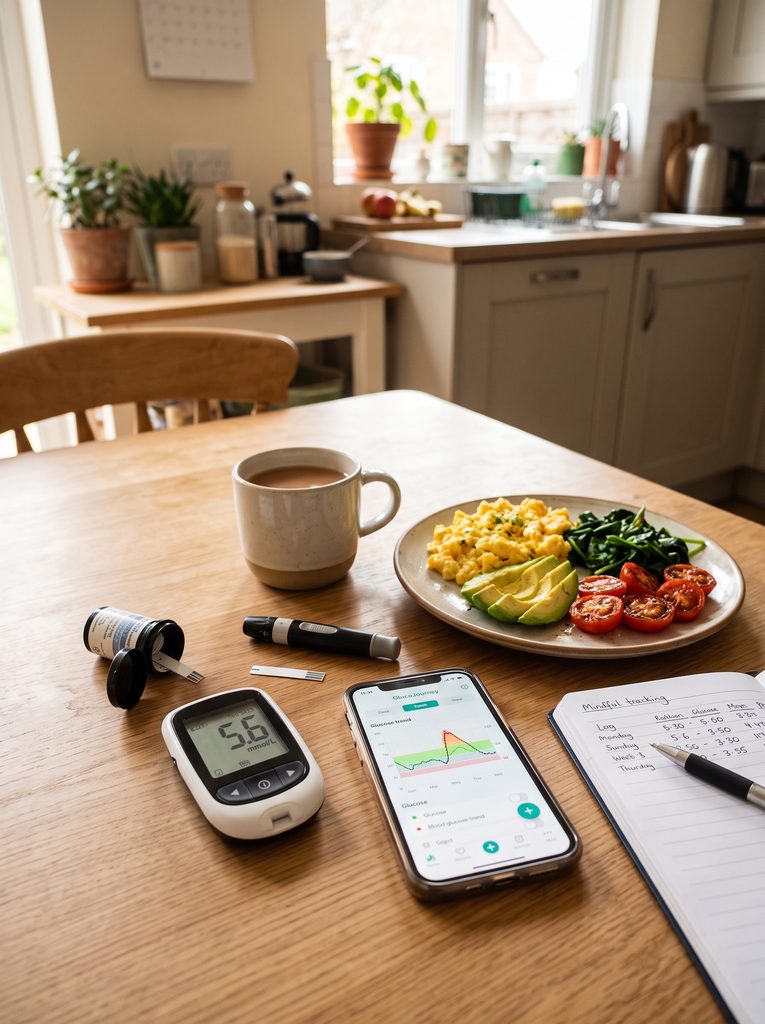
- Finger-Prick Blood Glucose Meters (BGM): A traditional, highly reliable method using a small droplet of blood on a test strip. It provides an exact snapshot of your glucose at that exact second and remains a handy, budget-friendly staple.
- Continuous Glucose Monitors (CGM): Small wearable sensors placed on the back of your arm (such as the FreeStyle Libre or Dexcom). They read glucose in your interstitial fluid every minute, displaying live trend arrows on your phone so you can see if your sugar is rising, falling, or stable without constant finger pricks.
Tips for tracking consistently:
- Test in pairs: If you’re checking how a meal affects you, test right before eating and again around 2 hours afterwards. The difference between the two numbers tells you how your body handled that food.
- Look for trends, not single numbers: Don’t be disheartened by one off-reading. Look at the weekly pattern. Is your morning fasting reading gradually coming down? Are certain takeaway meals always pushing you high?
- Understanding Hypos and Hypers:
- Hypo (Low blood sugar): Typically under 4.0 mmol/L. You might feel shaky, sweaty, hungry, or confused. Treat it quickly using the “Rule of 15”: take 15g to 20g of fast-acting carbohydrate (like 4–5 jelly babies or half a glass of fruit juice), rest for 15 minutes, and re-test.
- Hyper (High blood sugar): Levels persistently sitting above 7.0 mmol/L before eating or 8.5 mmol/L after meals. If you notice this happening often, it’s a sign to look at portion sizes, carb intake, hydration, or speak with your GP or diabetes specialist nurse.
Managing Blood Sugar Levels Effectively
Managing blood sugar doesn’t mean your diet has to be bland or punishing; it’s about smart swaps and consistent habits.
- Dietary Strategies:
- Embrace a lower-carb approach: Cutting back on bread, white rice, pasta, potatoes, and ultra-processed snacks removes the main drivers of glucose spikes. Focus your plate on wholesome proteins (poultry, beef, fish, eggs), healthy fats (olive oil, avocado, butter), and fibrous greens.
- Meal timing and fasting: Giving your digestive system a dedicated rest; such as a 16:8 intermittent fasting window (skipping breakfast and eating within an 8-hour window) can significantly improve insulin sensitivity and help bring down stubborn morning fasting numbers.
- Food sequencing: When eating a mixed meal, try eating your protein, fats, and vegetables before carbohydrates to slow down gastric emptying and reduce post-meal spikes.
- The Power of Exercise:
- Post-meal strolling: A brisk 10- to 15-minute walk straight after a main meal acts like a natural sponge for excess blood glucose.
- Resistance training: Building and maintaining lean muscle through bodyweight moves or lifting weights creates a larger metabolic “sink” to store glucose safely.
- Medical Treatments: Lifestyle is the foundation, but medications are valuable tools when needed:
- Metformin: A first-line treatment that reduces the amount of glucose your liver produces and helps your body respond better to its own insulin.
- SGLT2 inhibitors (e.g., Dapagliflozin, Empagliflozin): Work through your kidneys by gently filtering extra glucose out via your urine.
- GLP-1 and dual GIP/GLP-1 receptor agonists (e.g. Semaglutide, Tirzepatide): Modern injectable treatments that support natural insulin release, slow digestion, curb appetite, and help with substantial weight loss.
- Always consult your healthcare team before adjusting medications, particularly if you are making major dietary changes like going low-carb.
The Connection Between Blood Sugar and Diabetes Management
Keeping blood sugar within a healthy range is the single best way to protect your long-term health. Over the years, chronic high blood sugar (hyperglycaemia) acts like grit in your blood vessels, leading to complications:
- Microvascular issues (small blood vessels): Retinopathy (eye and vision problems), nephropathy (kidney strain), and neuropathy (nerve pain, tingling, or numbness, especially in the feet).
- Macrovascular risks (large arteries): Significantly increased risk of cardiovascular disease, heart attacks, and strokes.
The good news? The body has an incredible capacity to heal. Ground-breaking UK research, including the Diabetes UK-funded DiRECT trial, has proven that Type 2 diabetes does not have to be a progressive, irreversible condition.
Through targeted dietary changes, low-carb living, and sustainable weight loss, many people are able to achieve Type 2 diabetes remission; bringing their blood sugar back into the non-diabetic range without diabetes medication.
The Emotional Side of Diabetes: Managing diabetes is just as much a mental journey as a physical one. Fluctuating blood sugars can leave you feeling drained, irritable, or dealing with brain fog. On top of that, constant tracking, food choices, and finger-pricks can sometimes lead to “diabetes burnout”.
Be kind to yourself. Diabetes management isn’t about perfection; it’s about learning what works for your body, celebrating small wins, and making sustainable choices you can stick with for life.
You may also like
 Managing diabetes with hope understanding China’s stem cell claims
What is Gestational Diabetes?
Discover Diabetic-Friendly Dining Options to Support You
What is Type 2 Diabetes?
A Hopeful Glimpse into Stem Cell Research for Diabetes Management
Carnivore Diet 101: What I learned from Steak & Butter Gal